Showing posts with label Netflix. Show all posts

December 27, 2017

The 2017 tech year-in-review

The year is about to come to an end and I wanted to jot down a few thoughts about some of the events that I have found most significant in the tech and startup spaces over the last 12 months.

(1) Amazon goes brick and mortar

 If there is one major corporate transaction that I would highlight that would be Amazon's $14bn purchase of Whole Foods. We are all well aware of Amazon's clout and how much many of us rely on it for buying and selling stuff. This acquisition is a game changer and, even more importantly, it seems like it is not going to be the last of its kind, as in recent weeks there have been multiple rumors, in particular around French leader Carrefour, about Amazon acquiring in Europe.


As NYU Stern's professor Scott Galloway usually says, Amazon is slashing value out of traditional retailers and is likely to become the first $1tn company in the world.  Interestingly, he also points out how Amazon is a threat for competition and advocates for antitrust action that could easily to breaking the company up in different pieces.

Even in such a scenario, Amazon is a global "darling". Case in point: the beauty pageant / auction launched by Amazon among American cities for the purpose of erecting its second American HQ. An astonishing 238 proposals have been received. Game on.

(2) The crypto hype
As blockchain technology evolves, 2017 will be remembered as the year when cryptocurrencies became a new hot thing in tech. I would not dare say the became mainstream but it is obvious that when your mother asks you what bitcoin is and how she can invest in it, there is something going on. I already blogged about this some months ago.

The main cryptocurrencies (in particular bitcoin and ethereum) have had dramatic price increases (chart below; source: Coinbase), which has led to lots of market debate as to whether we are in a new bubble or if, on the other hand, bitcoin is for instance the new refuge replacing gold. There are arguments and interest of all kinds. From Jamie Dimon's - JPMorgan Chase's CEO - calling people "stupid" for buying bitcoin to the CME Group's launch of bitcoin futures a few weeks ago.


But this crypto frenzy has gone past bitcoin and ethereum. ICO is the acronym of the year and funds raised through this mechanism have exceeded $3bn. We have seen a proliferation of new ethereum-based tokens relying, in many cases, in dubious business models.


I took the time this year to learn a bit about all these topics and decided to invest (ie. gamble) some money in various cryptocurrencies to give this thing a shot. It did not go badly, although I am kind of expecting a short term correction and have therefore cashed in for the most part. In any case, in spite of diverse theories, I'd argue nobody has a real clue about how to value these new assets and how things are going to go down the road.

(3) The Uber crash

Uber has been for years the darling among startups and venture capital investors. Aggressive growth all over the world, increasing valuation round after round, huge losses relying on future market domination...and all of this relying on a "bro-kind-of culture" of work hard play hard.

In 2017 the foundations of Uber became under substantial scrutiny as a result of a very unfortunate  sexual harassment scandal which, rather than an isolated event, proved to be part of the company's culture itself. The whole thing led to CEO Travis Kalanick's resignation and to significant user backlash...and planted the seed for the #MeToo movement - which Time magazine has fairly acknowledged as "person of the year" - that exploded with the whole Harvey Weinstein "plot" .

I am very curious to see how Uber recovers under new CEO Dara Khosrowshahi after having moved into such a slippery slope. Corporate culture matters and now that culture-related scandals are reportedly bringing valuation down, executives will most likely pay more attention to it.

(4) Disney threatens Netflix

Star Wars: Episode VIII premiered in L.A. on December 9 and just a few days later in Europe. But this was not the only surprise that The Walt Disney Company had for us before the year end. On December 14 it was announced that Disney would be acquiring 21st Century Fox film and tv studios for $66bn (including debt) which, among others includes the FX and National Geographic networks, a large additional stake in Hulu and valuable franchises such as Alien and Avatar, or TV shows such as "How I met your mother". A massive move that I expect will change the playing field very significantly in the coming years.
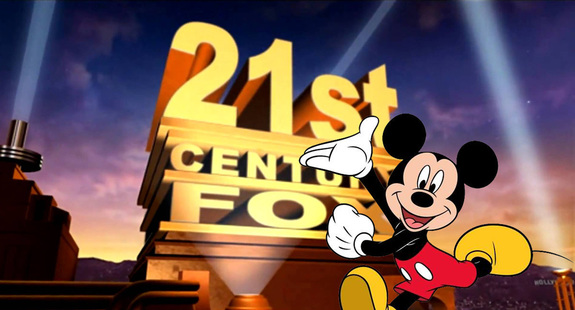
I have thought for a long time that entertainment consumption has changed forever and that TV as we have known it is doomed. Disney has understood this and in the last year they have amassed a ton of content on top of their traditional stuff, including Marvel, the Star Wars franchise. Now it is this bold move.

In the last months there have been rumors about Netflix being a target for Disney. However, this may no longer be the case. After deciding to pull content from Netflix, all points in the direction of launching its own service, either from scratch or on the back of Hulu. If you add sports content (i.e. ESPN) to the mix, we do have a new streaming battle ahead. Watch out Netflix, Amazon.

(5) The advent of fake news

2017 has been the year when fake news have become a major threat globally. It all started at the time of the US presidential election in late 2016. As it has been proven, Russia played a a central part in creating fake news that substantially contributed to changing public perception and generating opinion in favor or Trump. Upon becoming president, Trump started a PR war accusing CNN and others of being fake news. Several examples of this unacceptable activity followed for instance with the French election and, more recently, with the pathetic allegations against Spain's democracy fabricated by the Catalonian pro-independence block (and the likes of Russia and Venezuela) supporters) in their crazy and illegal pursue of independence.

Fake news are a 21st century weapon aimed at bringing down the foundations of democracy as we know it. And it is in this instance that technology companies - in particular Facebook and Google given their size and business models - have a huge responsibility to prevent, or at the very least minimize, fake news from happening. They have the budget, the resources and, increasingly, the technology (e.g AI) to address this. I am hoping that they honor their duty.

It's been an interesting year. I am sure 2018 is going to be a ride, which I am going to have to follow even closer. More to come soon.

Happy holidays!

October 29, 2017

Corporate culture does matter...a lot

I had been thinking about writing a post on corporate culture for quite some time. However, I had been postponing it for one reason or another. It was about time.

Yesterday I listened to one of the latest podcasts by K Fund (one the leading VC funds in Spain) - it has lately become a must-listen to me and I very strongly recommend it - featuring David Tomas (founder of online marketing company Cyberclick) and Carina Szpilka (partner at K Fund and former CEO at ING Direct bank in France and Spain). This has definitely pushed me to bring together my thoughts, many of which are in line with theirs.


What is a company's culture? I guess that each one of us will have her own definition. To me, it is the set of values, practices, attitudes and habits that employees embrace and live by. Such a set defines how a company works on a daily basis and, ultimately, what it actually is. One gotta respect and embrace the corporate culture if she wants to succeed. Conversely, the company (ie. founders and/or its management) must make sure that employees honor the culture so the company thrives.

Before joining the startup ecosystem, I worked for approximately 10 years in two of the most reputable law firms in the world. In other words, 100+ years old companies with established cultures that everyone is familiar with, honors and expects others to honor. Service excellence, super high quality standards across the board, teamwork and hard work no matter what are non-negotiable. You may like it or not but, truth be told, the system works and has been working for more than a hundred years. And even if I did not agree with all of it, I do acknowledge that many of those culture attributes were good and have significantly contributed to how I work today.

But building a company's culture is not a piece of cake. And this is particularly relevant when talking about young companies. Plus I would argue that it becomes even more difficult considering that many people disregard this topic to a large extent. As if just having an idea and a great founding team would be enough for long term sustainability...

Hundreds of guides, articles (I like this one by 500 Startups) and books have been written about this topic in the startup ecosystem. I would dare say that there is significant consensus on one thing: the culture is (i.e. should be) a reflection of the company's founders and it is such founders who are responsible - in particular in the early stages of a company's life cycle - for defining, redefining and adjusting it over time. And, maybe more importantly, for spreading it and turning it into the backbone of both the organization and how employees behave and interact towards the company and each other.

Two major points about how not to define a corporate culture:
  1. It is not about perks: do not get carried away by casual wear, free food and drinks, unlimited vacation time, fussball...and all kinds of fancy and sometimes crazy perks - seriously, a shooting gallery? - to attract talent and foster work/life balance. Culture goes way deeper.
  2. The value shopping-list: who is against teamwork, transparency, customer service and innovation, to name just a few "usual suspects"? Just listing some random values on your website won't do it for your culture. It is something that must be lived by on a daily basis.
I would like to point out three axes that can help founders define a culture, sustain it over time and turn it into a competitive advantage:
  1. Know what you want (and don't want) your culture to be: founders should make sure what they want their values and culture to be like. There is not right or wrong answer and everything will depend on the founders' own personality, preferences, working style, etc. Do not let the culture be created "by default". And if at some point you realize the culture is on a slippery slope - tell Uber about it - make sure to address this quickly and thoroughly.
  2. Practice what you preach: founders should be the first on the line to make sure that values are respected and desired attitudes and behaviors are honored and promoted - in other words, lead by example. It founders themselves don't do so, nobody will. Do you want people to be responsive and accountable? Well, make sure you reply to your emails and honor your own deadlines. Do not just refer this "culture thing" to your HR team because that will fail.
  3. Hire (and fire) according to your values and culture: 
  • In order to ensure long-term success to a larger extent, make sure that whoever you hire is a good match with your culture and values - it is better to have a less brilliant newcomer who does fit than a glowing star that does not care about anything other than himself. 
  • Should the latter occur, fire quickly - it will definitely send the message that the culture is an essential part of the organization. I love the following representation by Dr. Cameron Sepah - Medium post here) of the renowned performance-values matrix developed by GE's Jack Welch decades ago - fire the "assholes" as fast as you can.

Last but not least, if you want to have a thorough and practical example of what culture is (it goes beyond the points discussed above), invest some time reading the renowned Netflix culture deck. It is from 2009 but it is a must for anyone interested in the topic...or in building her own company.

Happy reading.

November 18, 2015

Musings on (changing) corporate cultures

I think that for the first time ever I am spending a relatively significant amount of time thinking about corporate culture. I am pretty sure that the main reason why this is happening is due to the fact that, after 10+ years working in "traditional" companies, a few months ago I started to experience what working in a startup environment means. It was a much sought after move but, leaving other considerations aside, I can acknowledge that the cultural change has been very significant.

When you join an established company with a long history and solid values behind it, you know (or think you know) the kind of game you are getting into. You may agree or disagree with all or some of those values but at the end of the day, it's typically been about getting the job that you want (or that you thought that you wanted). In addition, you realize over time - in particular if you look back at those jobs early in your career - how those values and cultures have shaped your own work ethos. And you realize that even more as you move into a brand new space that has little to do with what you were used to (and which in some instances you don't buy into in full).

I have attended the European E-Commerce Conference taking place in the city of Bilbao, Spain, which focuses on different aspects of the startup and digital ecosystems. Interestingly, I have ended up attending - driven more or less by my subconscious, I'd say - a couple of sessions focused on corporate culture and organization. I just wanted to share some thoughts that have caught my eye:


  1. Design for uncertainty. The days where an organization was designed to fit and thrive in a peaceful, stable, quiet ecosystem are gone. Change is all over the place and it is here to stay. Companies need to be built to adapt to permanent change, to uncertainty. It is indeed a dramatic shift.
  2. Culture mirrors founders. Several speakers in a panel agreed that in most cases a company's culture is (and should be) the result of its founders' values. But this is no guarantee of success as some founders may be willing to create and maintain a culture that is completely the opposite of that of the kind of talent they are willing to attract to build the company they want. 
  3. In absence of a culture, build one. Sometimes there is no corporate culture as such in place and, in that case, it is central to build one. This is a process that needs to be implemented top-down with the CEO and management fully onboard. But a culture cannot be created overnight, it takes time and there are multiple levers to be used (e.g. recruiting, technology, practices)  
  4. Bureaucracy vs. non-bureaucracy. People hate the idea of corporate bureaucracy. I dislike it too and it has traditionally driven me a bit crazy to "waste" my time in it. Ask anyone and they will assure that they would do anything to get rid of bureaucracy at the workplace. But as bad as it sounds, it is also true - in particular considering how quickly technology, work trends, markets, etc., are changing - that it may also be a bit of the glue that keeps things together.
  5. Hiring vs. inspiring: Steve Cadigan pointed out during a round table that, increasingly, people do not want to be hired but be inspired. I can't think of a more powerful statement aiming at the very core of any given company's culture. You need to make your company appealing so you are able to both retain your employees and be able to attract valuable talent - this is the most powerful marketing tool within your reach.
  6. Integrating the new stuff. There is technology out there that can help any company achieve a more cohesive culture. For instance, Slack was mentioned several times as a great way to foster communication, sharing and transparency. At the same time, it is necessary to integrate traditional ways of working (ie. 9-to-5) with increasingly popular trends such as remote work and freelancing. 
At one of the sessions reference was made to the "Netflix company culture deck". As most of the audience, I had no idea about what that was (all the speakers in the panel knew about it and now I understand why!). A simple google search has led me to it. It is from 2009 but it's great and still fully applicable today. It was once referred to as "Silicon's Valley most important document ever". It is a long one but I strongly recommend you to have a look.

This will do for now, yet I think I am going to continue thinking about all this stuff as I get used to the new variables in this game I am playing.

October 1, 2015

Netflix as a paradigm...or it's the content, stupid!!

There is no doubt that the significance of content in the media and digital spaces is paramount, and that thousands of reports, articles, books and posts have been written about it. Even major corporate deals have been reportedly completed - Verizon's recent acquisition of AOL is a case in point - on the basis of content. 

Content is king and becoming more and more significant. And when speaking of content, Netflix is one of those names that comes to mind right away. I have had some sort of direct experience about this most recently. 
Netflix, HBONow, Sling, Hulu, Amazon Prime... it is amazing how quickly you can get used to the seamless experience of having all the shows, documentaries and movies (i.e. content) you want within your reach at any time, without neither ads nor schedule constrains. Today, I am all in when it comes to cutting the cable cord. And I was not aware that I felt so strongly about it until circumstances have forced me to change my adopted habits and get back to cable tv.

My entertainment menu while in the U.S. came from over-the-top services such as Netflix, Amazon Prime and, more recently, HBONow. I have digested content like crazy, at my own pace, whenever I have wanted to. However, after landing in Spain I confirmed my fears: none of these services is available in Spain (well, Netflix just announced its forthcoming Spanish launch on October 20, thank god). That has led me to Telefonica's pay-tv offering which, in turn, has quickly discouraged me from watching tv at all. I can't stand the experience, I seldom find interesting content at a time that works for me.

Unfortunately, Spain has traditionally be at the very top in the global piracy rankings, both in relative and absolute terms. It is also often said that this is the result of a country culture. I am not gonna say that the latter is not partially true, but I am also pretty sure that the reality would be a very different one had Netflix or others been around for quite some time. Changing the existing mindset and making people pay monthly to get content is going to take a while.

Speaking of Netflix as a paradigm of good and relevant content, I couldn't help sharing their latest native advertising campaign - Cocainenomics, on the occasion of the premiere of "Narcos" - on the Wall Street Journal. It is jaw-dropping.


Native advertising is a growing trend in digital advertising: it is the practice of making an ad on a platform resemble the look and feel of whatever content the user is there to see or read. This a growing digital advertising segment has been forecasted to be worth $5-10 billion in 2016.  

All experts point out that, in order for native advertising to become the more engaging tool it is for the user, advertisers need to be able to tell stories, to connect with their audience, to address the later's needs. And content - more accurately, the meaningful and quality content - is the secret ingredient that guarantees success, for both publishers (more money) and brands (more brand awareness)...and readers (engagement).