(1) Amazon goes brick and mortar
If there is one major corporate transaction that I would highlight that would be Amazon's $14bn purchase of Whole Foods. We are all well aware of Amazon's clout and how much many of us rely on it for buying and selling stuff. This acquisition is a game changer and, even more importantly, it seems like it is not going to be the last of its kind, as in recent weeks there have been multiple rumors, in particular around French leader Carrefour, about Amazon acquiring in Europe.

As NYU Stern's professor Scott Galloway usually says, Amazon is slashing value out of traditional retailers and is likely to become the first $1tn company in the world. Interestingly, he also points out how Amazon is a threat for competition and advocates for antitrust action that could easily to breaking the company up in different pieces.
Even in such a scenario, Amazon is a global "darling". Case in point: the beauty pageant / auction launched by Amazon among American cities for the purpose of erecting its second American HQ. An astonishing 238 proposals have been received. Game on.
(2) The crypto hype
As blockchain technology evolves, 2017 will be remembered as the year when cryptocurrencies became a new hot thing in tech. I would not dare say the became mainstream but it is obvious that when your mother asks you what bitcoin is and how she can invest in it, there is something going on. I already blogged about this some months ago.
The main cryptocurrencies (in particular bitcoin and ethereum) have had dramatic price increases (chart below; source: Coinbase), which has led to lots of market debate as to whether we are in a new bubble or if, on the other hand, bitcoin is for instance the new refuge replacing gold. There are arguments and interest of all kinds. From Jamie Dimon's - JPMorgan Chase's CEO - calling people "stupid" for buying bitcoin to the CME Group's launch of bitcoin futures a few weeks ago.


But this crypto frenzy has gone past bitcoin and ethereum. ICO is the acronym of the year and funds raised through this mechanism have exceeded $3bn. We have seen a proliferation of new ethereum-based tokens relying, in many cases, in dubious business models.

I took the time this year to learn a bit about all these topics and decided to invest (ie. gamble) some money in various cryptocurrencies to give this thing a shot. It did not go badly, although I am kind of expecting a short term correction and have therefore cashed in for the most part. In any case, in spite of diverse theories, I'd argue nobody has a real clue about how to value these new assets and how things are going to go down the road.
(3) The Uber crash
Uber has been for years the darling among startups and venture capital investors. Aggressive growth all over the world, increasing valuation round after round, huge losses relying on future market domination...and all of this relying on a "bro-kind-of culture" of work hard play hard.
 In 2017 the foundations of Uber became under substantial scrutiny as a result of a very unfortunate sexual harassment scandal which, rather than an isolated event, proved to be part of the company's culture itself. The whole thing led to CEO Travis Kalanick's resignation and to significant user backlash...and planted the seed for the #MeToo movement - which Time magazine has fairly acknowledged as "person of the year" - that exploded with the whole Harvey Weinstein "plot" .
I am very curious to see how Uber recovers under new CEO Dara Khosrowshahi after having moved into such a slippery slope. Corporate culture matters and now that culture-related scandals are reportedly bringing valuation down, executives will most likely pay more attention to it.
(4) Disney threatens Netflix
Star Wars: Episode VIII premiered in L.A. on December 9 and just a few days later in Europe. But this was not the only surprise that The Walt Disney Company had for us before the year end. On December 14 it was announced that Disney would be acquiring 21st Century Fox film and tv studios for $66bn (including debt) which, among others includes the FX and National Geographic networks, a large additional stake in Hulu and valuable franchises such as Alien and Avatar, or TV shows such as "How I met your mother". A massive move that I expect will change the playing field very significantly in the coming years.
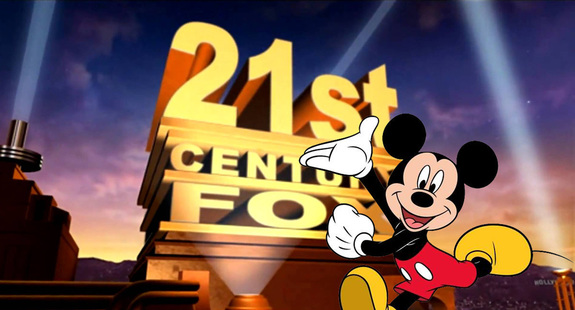
I have thought for a long time that entertainment consumption has changed forever and that TV as we have known it is doomed. Disney has understood this and in the last year they have amassed a ton of content on top of their traditional stuff, including Marvel, the Star Wars franchise. Now it is this bold move.
In the last months there have been rumors about Netflix being a target for Disney. However, this may no longer be the case. After deciding to pull content from Netflix, all points in the direction of launching its own service, either from scratch or on the back of Hulu. If you add sports content (i.e. ESPN) to the mix, we do have a new streaming battle ahead. Watch out Netflix, Amazon.
(5) The advent of fake news
 2017 has been the year when fake news have become a major threat globally. It all started at the time of the US presidential election in late 2016. As it has been proven, Russia played a a central part in creating fake news that substantially contributed to changing public perception and generating opinion in favor or Trump. Upon becoming president, Trump started a PR war accusing CNN and others of being fake news. Several examples of this unacceptable activity followed for instance with the French election and, more recently, with the pathetic allegations against Spain's democracy fabricated by the Catalonian pro-independence block (and the likes of Russia and Venezuela) supporters) in their crazy and illegal pursue of independence.
Fake news are a 21st century weapon aimed at bringing down the foundations of democracy as we know it. And it is in this instance that technology companies - in particular Facebook and Google given their size and business models - have a huge responsibility to prevent, or at the very least minimize, fake news from happening. They have the budget, the resources and, increasingly, the technology (e.g AI) to address this. I am hoping that they honor their duty.
It's been an interesting year. I am sure 2018 is going to be a ride, which I am going to have to follow even closer. More to come soon.
Happy holidays!

